Psychosocial evaluations for attorney-referred immigration matters.
Each report is written to support the legal record by documenting how trauma, culture, development, and structural barriers affect memory, disclosure, functioning, and risk.
What I evaluate
Asylum
Trauma, fear of return, disclosure barriers, state protection, relocation, and Istanbul Protocol-informed consistency language.
VAWA
Coercive control, battery or extreme cruelty, psychological injury, family context, and functioning.
T Visa
Trafficking trauma, coercion, vulnerability, safety, and recovery-related barriers.
U Visa
Substantial physical or mental abuse related to qualifying criminal activity and ongoing impact.
Hardship Waivers
Extreme hardship, family separation impact, functioning, caregiving, and contextual risk.
Fit check
Case-fit conversations, timeline questions, and evaluation appropriateness before secure intake.
What the report includes
- DSM-5-TR-informed diagnostic formulation where clinically appropriate.
- Clinical interview and trauma-informed psychosocial history.
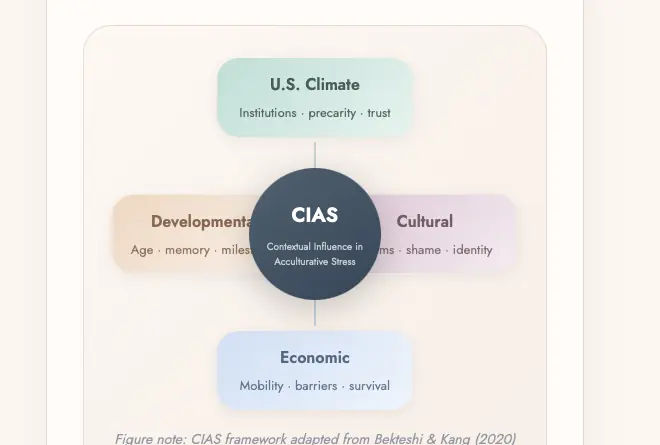
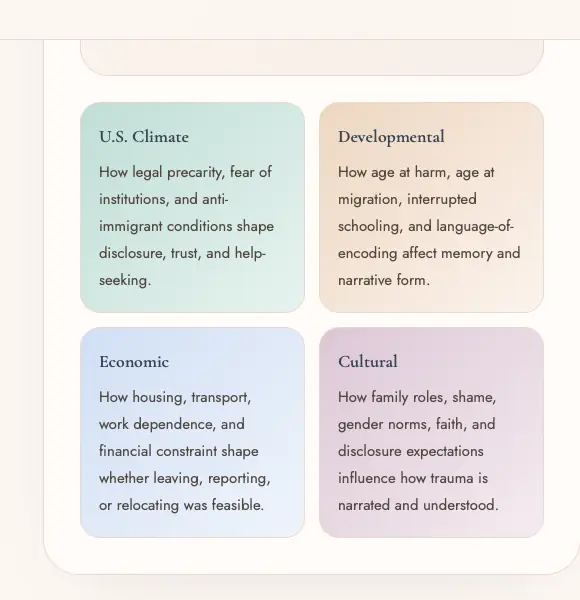
- CIAS contextual analysis: cultural, developmental, economic, and U.S. climate factors.
- Functioning, coping, symptom impact, and prognosis.
- Nexus-sensitive discussion and risk-on-return language where relevant.
- Attorney draft review for factual, jurisdictional, and privilege-related corrections.
Referral to report
Fit and scope check
Confirm case type, timeline, jurisdiction, conflict check, and whether an evaluation is appropriate.
Secure document transfer
After fit is confirmed, attorney provides relevant records through secure means.
Multi-session evaluation
Trauma-informed interviews, interpreter planning, and structured psychosocial assessment.
Draft and final report
Attorney review for factual/legal context; clinical opinions are not altered on request.
Typical evaluation fee ranges
Fees are confirmed in writing after case type, deadline, scope, jurisdiction, interpreter needs, and testimony needs are reviewed.
| Case type | Typical range | Notes |
|---|---|---|
| Asylum / EOIR | $1,200–$1,800 | Multi-session evaluation; trauma, disclosure, and contextual analysis. |
| VAWA | $1,000–$1,500 | Coercive control, abuse history, psychological impact, and functioning. |
| T Visa | $1,000–$1,500 | Trafficking trauma, coercion, vulnerability, and recovery context. |
| U Visa | $900–$1,400 | Substantial mental/physical abuse and current functioning. |
| Hardship Waiver | $900–$1,400 | Family separation, caregiving, hardship impact, and context. |
| Rush | +$300–$500 | Depending on deadline and availability. |
| Testimony | Quoted separately | Fee schedule provided at engagement. |
Standard turnaround is usually 2–3 weeks from completed intake and document receipt. Sliding scale may be available through qualifying nonprofit legal-aid referrals.
What attorneys should send
Please do not send confidential case materials through the initial inquiry. After scope is confirmed, useful documents may include a declaration draft, prior filings, country conditions, medical or mental health records, immigration history, court notices, and key dates.
Need the current fee sheet?
See the evaluation fee ranges below. Rush and testimony fees are confirmed separately in writing.
Voices from the field
"The way this framework centers why someone couldn't speak — not just what they said — is exactly what's missing in most legal documentation. It brings the team together around the client's full reality."
— Anonymous · Clinical Researcher & Practitioner, Immigration Mental Health
"This is genuinely useful for attorneys, especially those newer to asylum work. The guidance on chronology, disclosure barriers, and what to ask — and when — fills a real gap in how cases get built."
— Anonymous · Country Conditions Expert Witness, 200+ asylum cases
"Dr. Bekteshi understands the evidentiary weight of the evaluation and writes accordingly. The reports are thorough, court-ready, and hold up under scrutiny."
— Anonymous · Immigration Attorney, nonprofit legal services
Quotes shared anonymously with permission. Names, jurisdictions, and case identifiers are withheld to protect client confidentiality.
Common attorney questions
Will you sign a declaration?
Yes. Each report is signed under penalty of perjury and includes the credentials, methodology, and limitations sections counsel typically rely on.
Will you testify at a merits hearing?
Yes, where scheduling allows. Testimony fees are quoted separately at engagement.
What turnaround can I expect for a master calendar?
Standard turnaround is 2–3 weeks from completed intake and document receipt. Rush is possible at +$300–$500 depending on deadline.
Do you accept pro bono or legal-aid referrals?
A sliding scale may be available for qualifying nonprofit and legal-aid referrals. Please note nonprofit status in the inquiry.
How do you handle interpreters?
Interpreters are arranged with attention to language match, dialect, gender preference, and trauma-informed practice. Counsel is welcome to propose an approved interpreter.
What jurisdictions do you serve?
Evaluations are conducted remotely and admitted across U.S. immigration courts and USCIS adjudications. Please share venue at inquiry so jurisdiction-specific considerations can be flagged.
How is client confidentiality handled?
Records are exchanged only after secure intake is established. PHI is not requested in the initial inquiry. Reports are released to retaining counsel only.
Can the report be edited at attorney request?
Counsel reviews drafts for factual, jurisdictional, and privilege-related corrections. Clinical opinions are not altered on request.